Jade Mahjong
- 4.9
- Rating
- 5.00M
- Installs
- Free
- Price

 Analysis by App-foxy
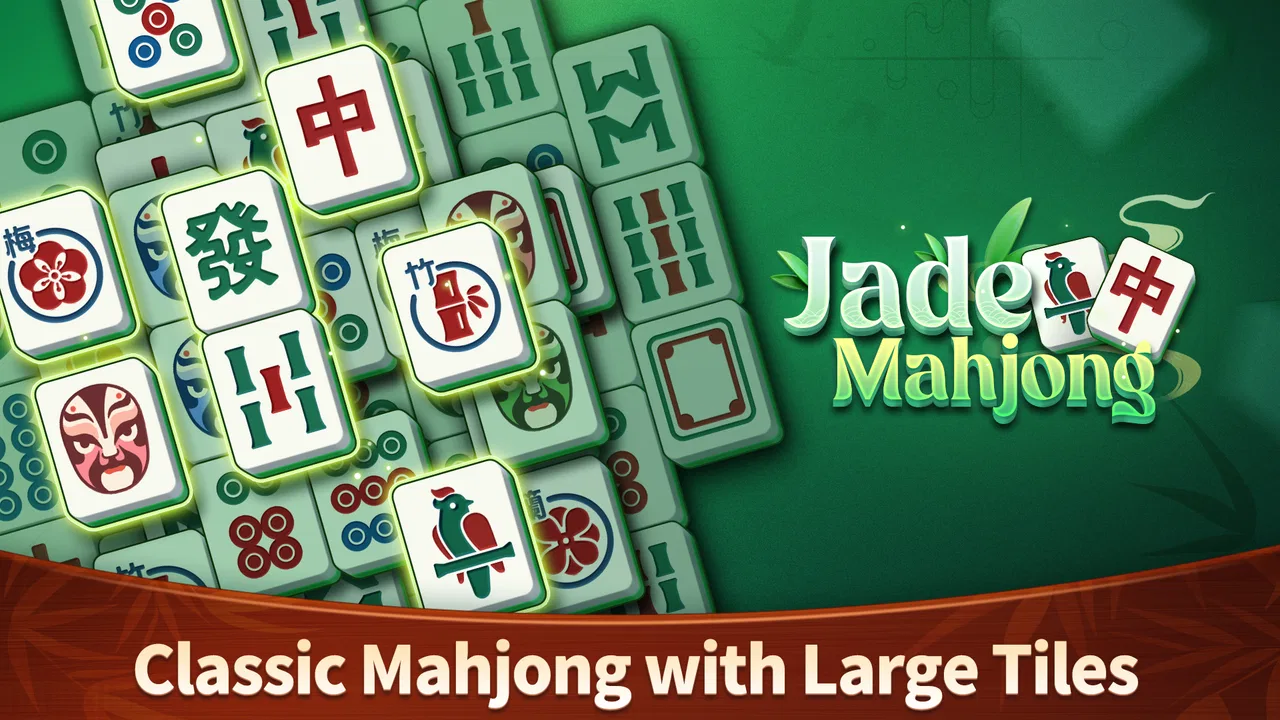
I found Jade Mahjong easy to understand from the first screen, which is exactly what I want from a casual board game. The idea is familiar: match identical mahjong tiles until the board is cleared. What makes this version approachable is its emphasis on large tiles, a calm senior-friendly presentation, and the ability to play without an internet connection. I did not need a long tutorial or a complicated account setup before making my first move.
That simplicity is also the main reason to try it. This is not a competitive mahjong app built around tournaments, chat, or elaborate progression. It is a quiet matching game for short breaks, relaxed concentration, and players who prefer clear visual targets over busy menus. The free price makes it easy to test, while the Everyone age rating keeps the audience broad.
What to expect when you begin
Jade Mahjong is a board game from Wonderful Studio, and its presentation focuses on the board rather than surrounding distractions. The large tiles are the most important design choice. They make the symbols easier to distinguish, particularly on a smaller phone or for anyone who finds dense tile layouts tiring. I also appreciate that the game’s basic appeal does not depend on a connection, so it fits situations such as a flight, a waiting room, or a commute where mobile service is unreliable.
You May Also Like

 Blood Strike: 2.5 Anniversary
Blood Strike’s Loadouts Turn Every Drop Into a Tactical Gamble
A close look at Blood Strike’s custom loadouts: how fast access to signature weapons reshapes its battle royale rhythm, rewards preparation, and narrows the gap between fights.

 Pandora - Music & Podcasts
Pandora’s Music Is Easy to Start, but Harder to Recover
Pandora’s strength is its low-effort path from a seed to a station. Its weak spot is how much confidence it asks you to place in connection, setup, and quiet recovery.

 8 Ball Pool
 Is Built on Rivalries, Rematches, and Routine
A close look at the rivalries, rematches, shared routines, and unanswered safety questions that turn a quick pool match into a persistent mobile community.

 Samsung Music
’s Quiet Strength Is Playing What You Already Own
Its reach comes less from spectacle than from dependable access to a personal library. That simplicity is both the app’s strongest retention engine and its ceiling.

 AccuWeather: Weather Radar
AccuWeather Review: A Quick, Clear Forecast for Everyday Decisions
For everyday plans, the best forecast is the one you can understand quickly. AccuWeather makes rain timing, radar, and local conditions easy to act on, with a few trade-offs.

 Hill Climb Racing
Why Hill Climb Racing Still Turns Crashes Into One More Run
A tiny car, a bumpy hill and one more upgrade: Hill Climb Racing keeps resurfacing because its simple chaos makes every near-miss feel personal.
More From Our News Desk



The matching rule is familiar, but the experience is not completely mindless. You need to scan the arrangement, notice exposed pairs, and decide whether taking an obvious match will make the remaining board easier or harder. A quick pair may be available, yet another move can sometimes open more useful tiles. That small layer of planning gives the game more staying power than a simple tap-and-clear toy.
The current version is 1.1.7 and the game supports Android 6.0 or later. In practical terms, that makes it suitable for many older Android devices as well as newer phones. I would still judge the experience by screen size and touch comfort rather than specifications alone: large tiles help, but a very compact display can still make a crowded board less comfortable for long sessions.
Its reception suggests that the straightforward approach is working. Jade Mahjong holds a 4.9 average from around 60 thousand ratings, with over a million installs. Those figures do not change the way I play, but they do make the app feel like an established choice rather than an obscure experiment. The free model also removes the biggest barrier for someone who simply wants to see whether this style of puzzle suits them.
The first setup should feel uncomplicated
After installing, I would begin with a short session rather than trying to understand every option at once. The useful first goal is simply to identify how the board responds: tap one tile, tap its matching tile, and watch what disappears. That first successful pair matters because it confirms the touch behavior and gives you a visual reference for later moves.
Before starting a longer game, I recommend holding the phone in the position that makes the symbols easiest to read. With a tile-matching game, comfort is more important than speed. If you are helping a parent, grandparent, or another first-time player, set the device on a stable surface and encourage them to look for one matching pair at a time. The large-tile design reduces strain, but it does not eliminate the need for good lighting and a comfortable viewing angle.
There is also a practical advantage to testing the game offline immediately. Turn off the connection only if you are comfortable doing so, then start a board and confirm that it behaves as expected. Since offline play is part of the game’s appeal, this quick check tells you whether it is ready for the exact situation in which you plan to use it. It is a better habit than discovering during travel that you have never tested your chosen game away from a network.
I would not approach this as a game that requires a long learning period. The first meaningful success should arrive quickly: find a pair, remove it, and use the newly opened space to inspect the next layer of the board. If you are introducing it to someone who is nervous about games, avoid explaining strategy before that first match. Let the board demonstrate the rule. Once the player sees the result, the rest becomes much less intimidating.
How to make the first clear feel manageable
My most useful early habit is to scan from the outside inward. Start by checking the tiles that appear least blocked, then compare them with the visible symbols elsewhere. This prevents the common beginner mistake of staring at the whole board as one large pattern. A smaller search area makes matching feel deliberate rather than overwhelming.
When several pairs are available, I would not automatically choose the first one I notice. Look for the move that exposes the greatest number of new tiles or removes a tile that is limiting access to a lower area. This is a simple way to turn a random sequence of taps into a plan. It also gives the game more depth without requiring complicated rules or a timer.
Another helpful approach is to pause after each match. The board changes visually, and immediately tapping again can make you miss a newly available pair. A brief scan after every successful action is especially useful for players with slower visual processing. It makes the session calmer and can reduce the feeling that the game is testing reaction speed.
If you are playing during a short break, do not treat an unfinished board as a failure. The offline format makes the game suitable for picking up and putting down, and the real value of a session may simply be a few minutes of focused attention. For me, that makes it a better companion for quiet downtime than a game that expects constant progress or a continuous connection.
Where new players may become confused
The biggest source of confusion is usually not the matching rule but the board’s changing visibility. A pair that was hidden or difficult to notice can become available after another match. New players may think they have reached a dead end when they have really just missed a newly exposed symbol. My solution is to rescan the entire visible layout after every move instead of continuing to search only where the previous pair was located.
Large tiles improve readability, but similar-looking symbols can still slow down a first session. I would compare the central markings carefully rather than matching by color or general shape. If two tiles look close, take a moment to check the details. Accuracy is more useful than rushing, and a careful pace suits this game’s relaxed design.
Another possible misunderstanding is expecting a traditional four-player mahjong experience. Jade Mahjong is a solo matching game in the board-game sense, not a social table with opponents, betting, or turn-based competition. Someone looking for strategic multiplayer mahjong should choose a dedicated online or competitive alternative instead. Someone wanting a quiet visual puzzle will probably find the format much more comfortable.
It is also worth setting expectations about challenge. The game’s accessible design is a strength for beginners and older players, but people who want elaborate campaigns, character systems, or a highly demanding puzzle ladder may find it restrained. Its pleasure comes from observation and gradual clearing, not from a large amount of content around the board.
Small habits that improve the experience
A useful workflow is to divide the board into zones. I mentally check the left, center, and right areas rather than scanning randomly. After a match, I revisit the zone where tiles were removed and then make a quick pass across the rest. This is not a built-in feature; it is a playing method that makes the large layout easier to manage and helps prevent overlooked pairs.
I also prefer to preserve flexible-looking moves when the position gives me a choice. If one match opens several possibilities and another merely removes two easy tiles, the first option may be more valuable. That does not guarantee a solution in every arrangement, but it creates a more informative board and gives the next decision a clearer purpose.
For a shared household device, I would keep the game ready as a low-pressure activity rather than presenting it as a challenge to beat. A family member can play a few moves while waiting for dinner, then return later. This is one of the strongest everyday uses: it occupies the hands and mind without demanding sound, social interaction, or a stable connection.
The senior-friendly design deserves a practical interpretation. It is helpful for anyone who values legibility, including people using an older phone or playing when tired. However, “large” does not mean every player will find every symbol effortless. If someone has significant difficulty distinguishing tile markings, it is sensible to try a short session first and observe whether the visual style remains comfortable.
How it compares with familiar alternatives
Compared with classic solitaire, Jade Mahjong gives me a more visual search task. Solitaire asks me to manage sequences, suits, and available moves, while this game asks me to recognize pairs and control what becomes exposed. I would choose solitaire when I want card-based planning and a stronger sense of ordered progression. I would choose this game when I want a cleaner board and fewer rules to remember.
Compared with fast-match puzzle games, it feels less frantic. There is no reason to treat every move as a reflex test, so it works better for a relaxed evening or a player who dislikes countdown pressure. The trade-off is that someone who enjoys bright effects, rapid combos, or constant rewards may find the experience too quiet.
Compared with online mahjong rooms, this is much easier to start and far more private. There is no need to wait for opponents or manage a social table before playing a few minutes. The cost of that simplicity is the absence of human unpredictability. If your favorite part of mahjong is reading other players and adapting to them, this solo format will not replace that experience.
Its offline capability is another clear distinction from many modern casual games. A connection-free board is useful for travel and for devices with limited service, but it also means the appeal must come from the puzzle itself. There is no online community or live competition carrying the session. That is a limitation for social players, yet an advantage for anyone who wants a dependable, distraction-free pastime.
Who will enjoy it, and who should skip it
I would recommend Jade Mahjong to first-time puzzle players, older adults who prefer readable boards, and anyone wanting a free game for quiet offline moments. It is also a good choice for a family member who does not want to learn a complicated interface. The Everyone rating reflects that broad accessibility, although individual comfort with small visual details still varies.
I would be more cautious about recommending it to players who need deep progression, multiplayer competition, or a constantly changing challenge structure. If you want a game with a story, a large collection of modes, or a demanding skill ceiling, this may feel too focused. Likewise, if matching identical tiles sounds repetitive after a few minutes, the clean presentation will not change the basic nature of the activity.
For a first-time user, my suggested path is simple: install the free game, start one board, make a single careful match, and then pause to see what the move revealed. Continue only if the visual search feels pleasant rather than tiring. Try it offline before relying on it for travel. After that, use the zone-scanning and post-match pause habits to make the board easier to read.
My overall impression is that Wonderful Studio has kept the focus where it belongs: on a clear, approachable mahjong matching board. The best reason to choose it is its combination of readable tiles, gentle pacing, and offline convenience. It is not trying to be a full social mahjong platform, and that narrow purpose is both its identity and its main limitation.
For me, Jade Mahjong works best as a small daily reset rather than a game I would play for hours chasing elaborate rewards. Its 1M+ installs and strong 4.9 average show that many players have responded to the same straightforward appeal, but the decision is ultimately personal. If you want an uncomplicated board puzzle that lets you reach a first success quickly and keeps the focus on matching, it is an easy one to recommend. If you need competition or extensive variety, a different mahjong or puzzle app will serve you better.
Released on September 25, 2025, it arrives as a modern option while keeping its design deliberately familiar. That balance is what I found most reassuring: there is enough planning to make each clear feel earned, but not so much complexity that a new player is left wondering what to do next.
FAQs for Jade Mahjong
01What is Jade Mahjong and how does it differ from traditional Mahjong?
Jade Mahjong is a digital adaptation of the classic Mahjong game, designed for both Android and iOS platforms. Unlike traditional Mahjong, which is a four-player game, Jade Mahjong is typically played solo. The game features beautifully designed tiles and various layouts, offering a modern twist with digital enhancements like hints and shuffle options that aren't available in the traditional version.
02Is Jade Mahjong suitable for beginners?
Yes, Jade Mahjong is designed to be accessible for beginners. The app includes a tutorial mode that guides new players through the basics of Mahjong, explaining rules and strategies. Additionally, it offers adjustable difficulty levels, allowing players to start easy and gradually increase the challenge as they become more comfortable with the game.
03Are there any in-app purchases in Jade Mahjong?
Jade Mahjong does offer in-app purchases. While the basic game is free to download and play, there are optional purchases available that enhance the gaming experience. These may include additional tile sets, new layouts, or premium features such as ad-free gameplay. Players can enjoy the core game without spending money, but these purchases can add variety and convenience.
04Does Jade Mahjong require an internet connection to play?
No, Jade Mahjong does not require a constant internet connection. Players can enjoy the game offline, making it ideal for playing on the go or in areas with limited connectivity. However, some features, such as accessing online leaderboards or downloading new game content, might require an internet connection.
05What are the device requirements for Jade Mahjong?
Jade Mahjong is compatible with most modern Android and iOS devices. For Android, it typically requires version 5.0 (Lollipop) or higher, and for iOS, version 10.0 or later is recommended. The app is optimized for both smartphones and tablets, ensuring a seamless gaming experience across different screen sizes. Ensure your device has adequate storage space for smooth operation.
Pros
- Intuitive interface with easy navigation.
- Beautifully designed tiles and backgrounds.
- Relaxing music enhances the gaming experience.
- Supports multiple difficulty levels.
- Offline mode available for uninterrupted play.
Cons
- Limited customization options for themes.
- Ads may be intrusive during gameplay.
- No multiplayer mode for competitive play.
- Lacks a detailed tutorial for beginners.
- Occasional lag on older devices.

Jade Mahjong
Gallery